
Restorative · Product Review
Hatch Restore 3: a bedside device that replaces the phone
A review of what it is like to live with: the sound options, the nightstand footprint, and how it holds a wind-down routine together.
The short version
This is a bedside sound and light device, not a medical product and not a sleep tracker. It sits on a nightstand, plays customizable sleep sounds, and exists mainly so your phone can charge in another room. That is the whole pitch, and it is a stronger one than it sounds.
- Sound options
- More than 80, per the coverage we followed
- Where it stands
- On a bedside table, not mounted, not a travel device
- Best fit
- Anyone still using a phone as alarm and sound machine
- Skip it if
- Your phone already sleeps outside the bedroom
The hardware
See the bedroom setup guideWhat the device actually is
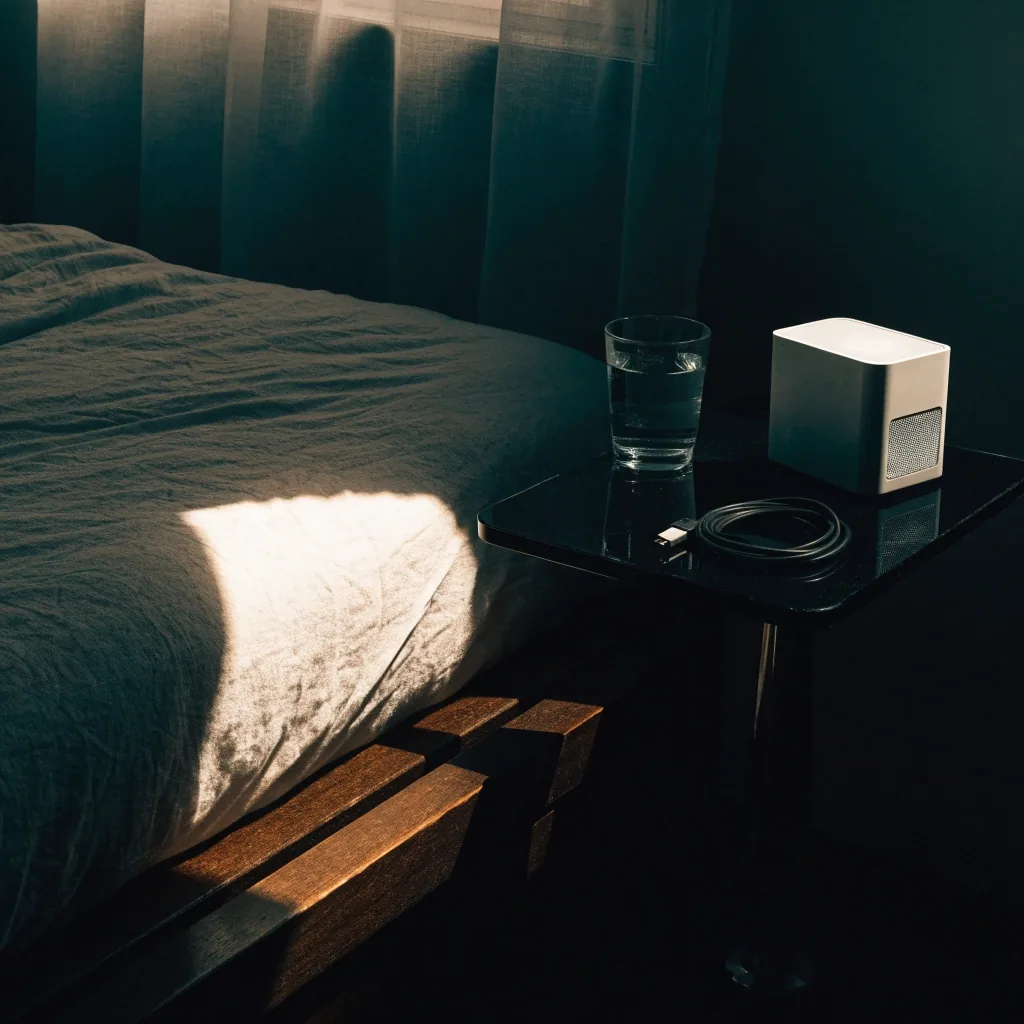
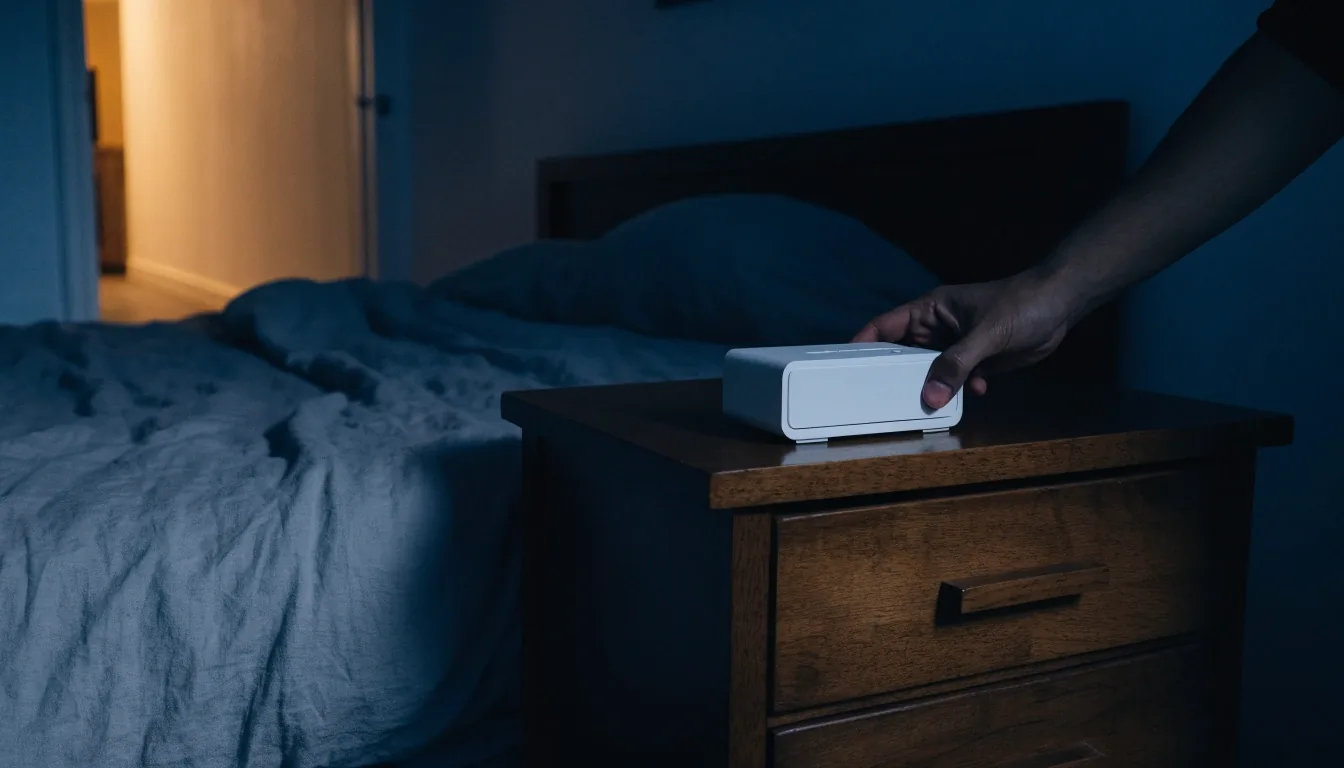
The Restore 3 is designed to sit on a bedside table and play customizable sleep sounds. According to the coverage we followed, it offers more than 80 sound options, which is a lot more than most people will ever use. It is positioned as a wind-down gadget rather than a phone replacement, and that distinction matters.
It does not attempt to be a smart display or a general-purpose device. There is no browser, no message tray, nothing to scroll. It does one job in one spot, which is why it fits a bedside routine rather than fighting it. In a room where the phone has quietly become the alarm, the sound machine, and the last thing you look at, a single-purpose object is the point.
What it is not asked to do
- It is not a smart display, and it does not run apps beyond its own controls.
- It is not a general-purpose tablet parked on the nightstand.
- It is not a whole-house speaker or a kitchen timer that wandered upstairs.
The case for taking your phone out of the bedroom
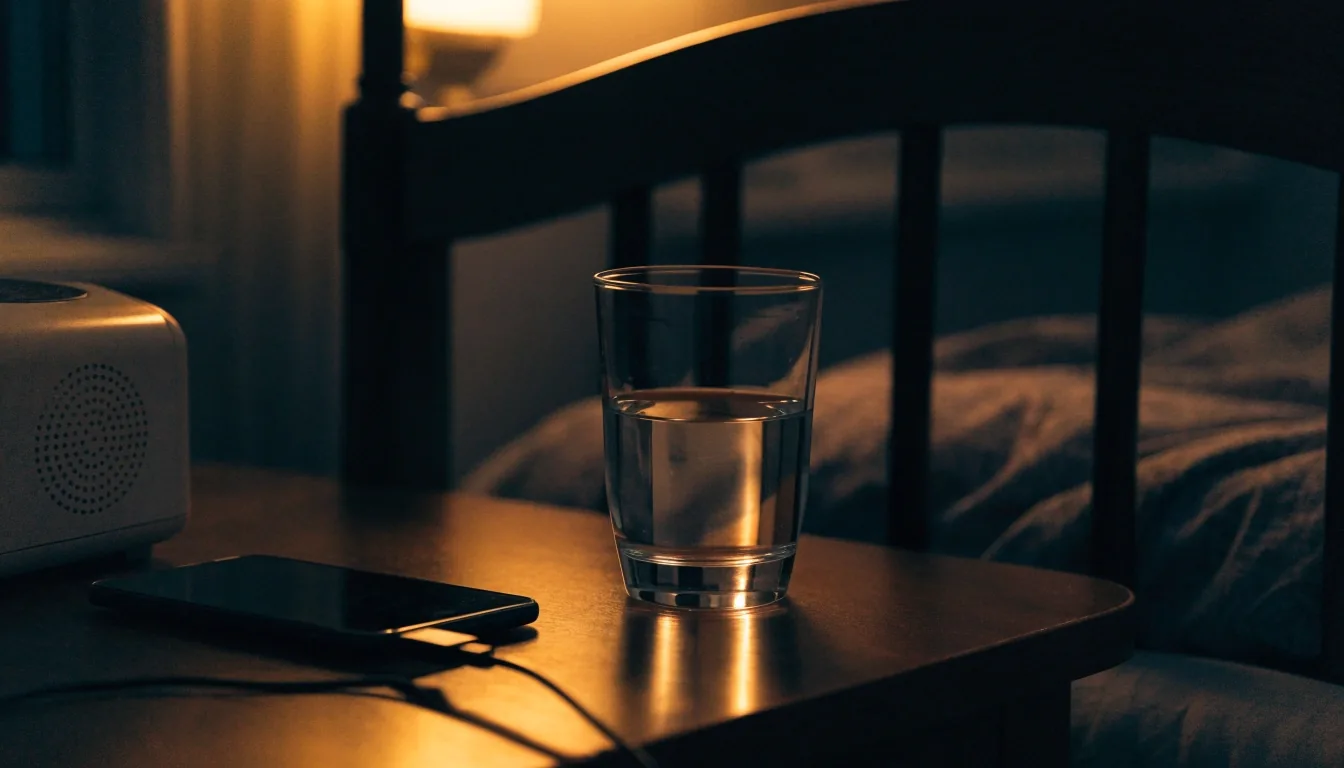
Most wind-down routines fail at the same point: the phone. It is the alarm, the sound machine, and the last thing you look at. The Restore 3 breaks that bundle. You get an alarm and sleep sounds from a device that does not bring messages, and your phone can charge in another room.
That is a behavioral change, not a technical one, and it is the strongest argument for the product. Nothing in the device makes you sleep better by itself. It simply removes the excuse to keep a screen within arm's reach, and the rest of the routine then has room to work. If you already keep your phone out of the bedroom, this benefit disappears.
The bundle it breaks
- Alarm clock — moved off the phone.
- Sleep sound — moved off the phone.
- Late scroll — left with the phone in the other room.
Sound options and how to use them
More than 80 sound options sounds excessive until you realize most people settle on two or three. The useful approach is to pick one steady sound for sleeping and one different sound for winding down, so the change itself becomes a cue. Treat the extra options as range, not a menu you need to explore.
You want one fixed sound and no app
A fan-based machine like the Yogasleep Dohm Classic
Simpler, cheaper, physical dial
You want to program the evening
Restore 3 with a saved wind-down sequence
Where it earns its place
You want a sound that changes nightly
Any sound machine, set to one thing
Variety is not the benefit here
None of these are worse products. They answer different questions. The Restore 3 makes sense if you want to program the evening; it makes less sense if you just want a wall of noise that stays exactly as it was when you plugged it in.
Sizing up
Bedside fit and physical presence
The device is built to live on a bedside table, which means it takes up the space where a lamp or a glass of water might go. That is worth checking before you buy, particularly in smaller bedrooms where the nightstand is already crowded. It is not a wall-mounted or under-pillow device, and it is not designed to travel.
If your bedroom setup is minimal, this fits. If your nightstand is a shelf with three things on it, measure first, and decide what moves before the box arrives. Settling the footprint question before purchase is the difference between a device you keep and a device that spends a month in a drawer.
Wind-down versus sleep: two different jobs
A device like this does two jobs that are easy to confuse. Winding down is about cues: a sound, a light change, a clear start to the quiet hour. Sleeping is about covering noise for the next seven hours. The Restore 3 can do both, but they should be set up differently: a short, distinct sound sequence for the wind-down, then one steady sound for the night. If you use the same audio for both, the cue loses its meaning.
Job one · winding down
A short, distinct sound that starts the quiet hour. Its value is the signal, not the sound itself. When it comes on, the evening has changed shape.
Set it once. Touch it once. Let the sound do the announcing.
Job two · sleeping
One steady sound that runs unattended for hours. It should be boring enough that you stop noticing it, which is exactly the point of a noise cover.
If you notice it at 3 a.m., it is not doing its job yet.
Where it fits in a 60-minute routine
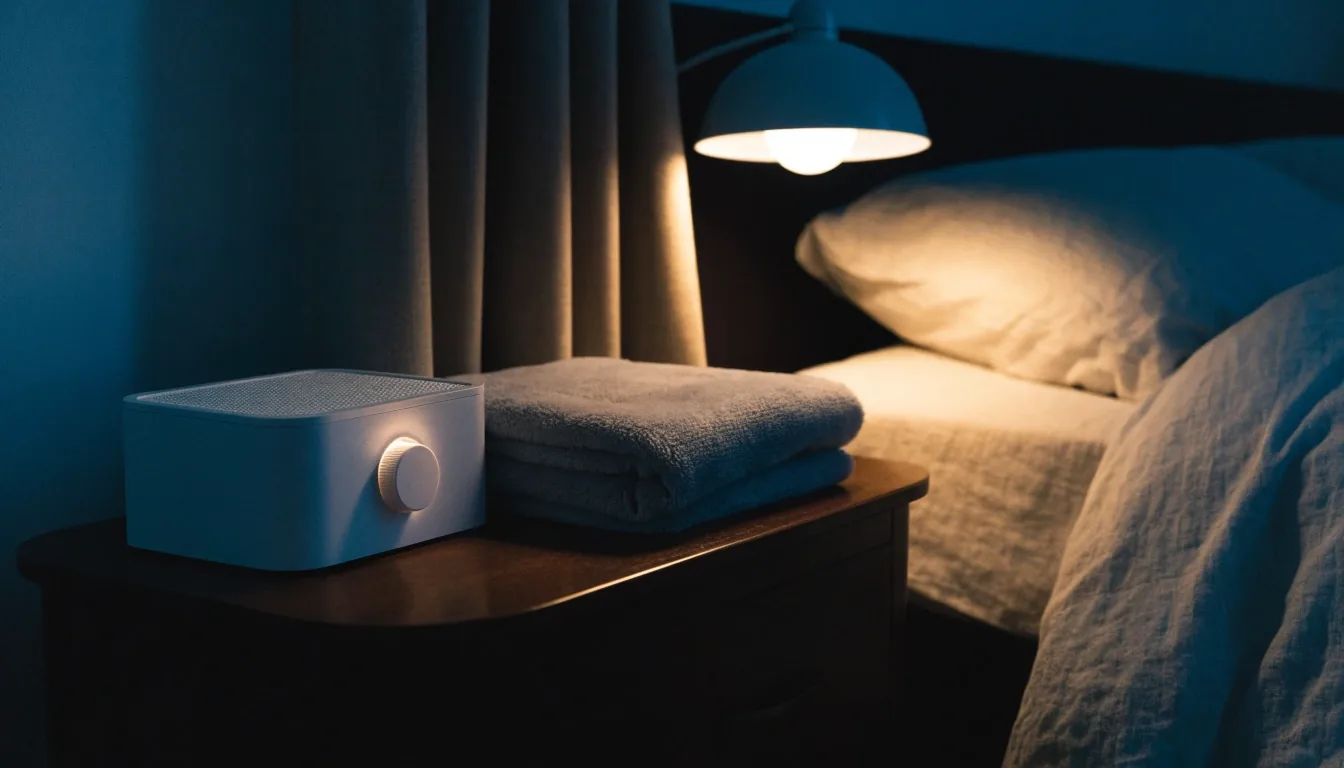
In a full evening routine, the device belongs at the start. An hour before bed, you switch the main lights off, start the wind-down sound, and leave your phone charging elsewhere. Then the routine continues without it: shower, quiet time, bed.
-
First 10 minutes
Lights off, wind-down sound on, phone plugged in somewhere that is not the bedroom.
-
Next 30 minutes
Shower and quiet time. A pillow spray like This Works Deep Sleep Pillow Spray or a magnesium-infused shower gel can mark the same transition in the bathroom.
-
Last 20 minutes
Bed, one steady sound for the night. The device is already running; you do not touch it again.
The device is one cue among several, and it works best when it is not the only change you make. If it carries the entire routine alone, the routine usually lasts about a week.
Honest boundaries
Compare sound machines and masksWho should skip it
If you sleep with a fan and your phone on airplane mode, you do not need this. If you already own a white-noise machine you like, the Restore 3 mostly adds a screen and an app to something that already works. It is also a poor fit if you travel often, since it is designed to sit in one place. And if the price matters more than the phone-separation benefit, a basic machine and a separate alarm clock get you most of the way there.
Read that list literally before ordering. Most of the frustration with bedside devices comes from buying the one that does more than the bedroom needs.
Living with it over months
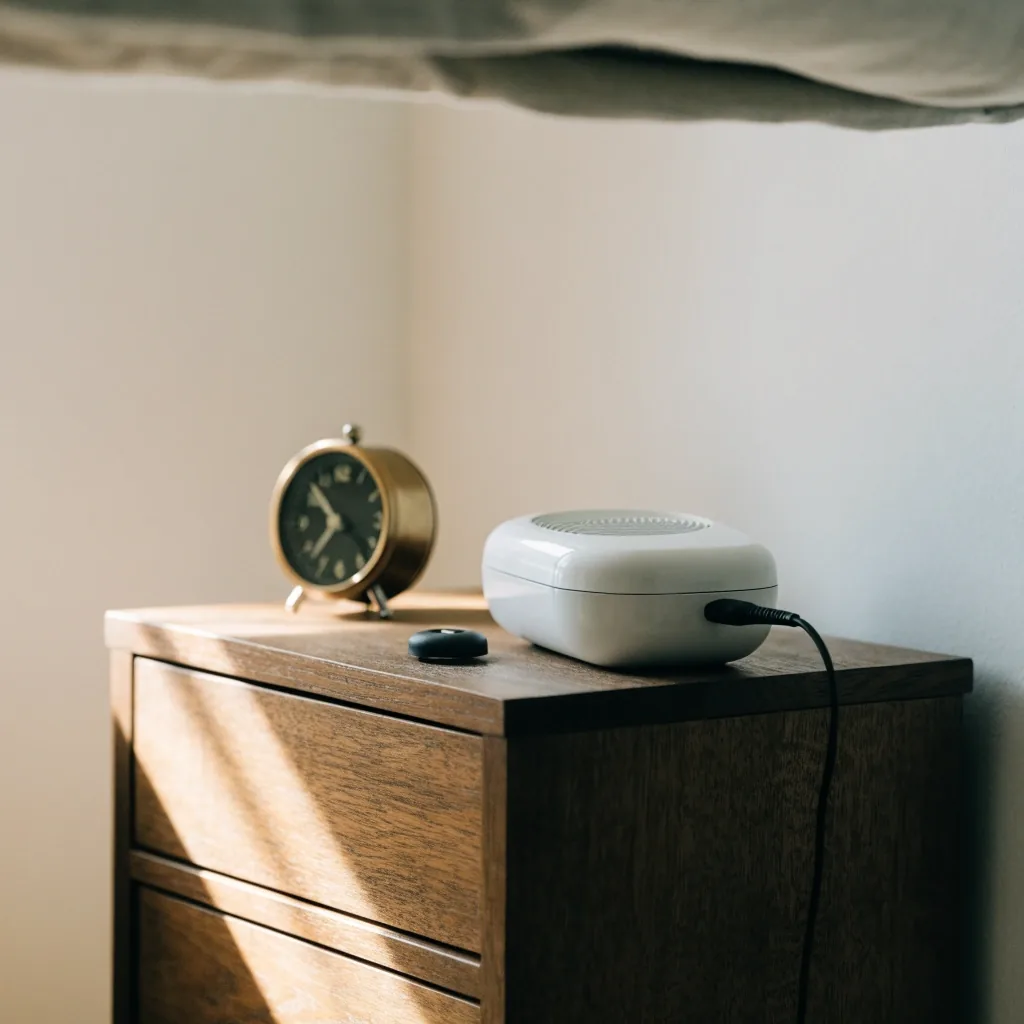
The real test of a bedside device is whether you still use it after the novelty fades. Devices that require an app every night tend to get abandoned; devices with a physical control tend to survive. The Restore 3 sits somewhere in between, which is why the routine around it matters. If you set it up once, leave it on the same sound, and only touch it to start the wind-down, it becomes background. That is the goal. A bedtime device should be boring by the third week.
The failure mode is not the hardware, it is the nightly fiddling. Chasing a new sound every evening keeps the device interesting, and interesting is the opposite of what a bedroom cue should be. Pick the sound in the first week, then stop. The evening routine benefits from an object you stop thinking about.
What it does not do
It does not diagnose anything, it does not measure your sleep accurately, and it does not fix a room that is too warm or a mattress that is past its life. It is not a sleep tracker, and it is not a substitute for a consistent wake time.
If your sleep problem is a bedtime that moves by two hours every week, this device will not solve it. It removes one obstacle, the phone, and the rest of the routine still has to be built by you. That is a real limit, and the review is more useful for saying so.
Questions people ask before buying
Does the Hatch Restore 3 replace a white-noise machine? Open
For most people, yes, if you want programmable sound from one bedside device. A fan-based machine like the Yogasleep Dohm Classic is simpler and needs no app. Pick based on whether you want one fixed sound or a scheduled evening.
Do I need the app every night? Open
You can set a routine and leave it running on the same sound, which is the approach that tends to last. If you are adjusting sounds nightly, the routine cue stops working.
Is it worth it if my phone is already out of the bedroom? Open
Probably not. The main benefit is separating sound and alarm from your phone. If that is already done, the device adds little beyond convenience.
The device is one cue. The routine is yours to build.
Start with the setup guide if the room still needs work, or the routine page if the room is fine and the evening is the problem. Questions about a specific bedroom can go to the Semarang studio; Monday to Friday, 9:00 AM to 6:00 PM.
Restorative · Jl. Gajah Mada No. 15, Sekayu, Semarang Tengah, Semarang, Jawa Tengah, 50134 · +62 24 359 0688