
Bedroom setup guide · Restorative
Set up a bedroom for easier restful nights
This guide is about the room you sleep in, not the products you put in it.
Why the room comes first
Four things decide how a night feels
Most sleep problems we hear about from readers in Semarang, Jakarta, and smaller towns across Jawa Tengah come down to four things: too much light, unpredictable sound, a warm room, and a bedtime that moves around. Fix those, and you will notice the difference before you spend money on anything.
Work through the steps in order. Each one is cheap or free, and each one makes the next easier to judge. If you skip ahead to buying a new mattress or a sound machine, the room's own problems will still be there, and a good product will look worse than it is.
- Light leaking into the room Curtains, tape, mask
- Sound you cannot predict Steady masking
- A room that runs warm Airflow, timer
- A bedtime that moves One wake time
Set the room first, then judge every product against a room that is already dark, quiet, and cool.
Chapter · Light
Compare sleep comfort productsStart with a light audit at bedtime
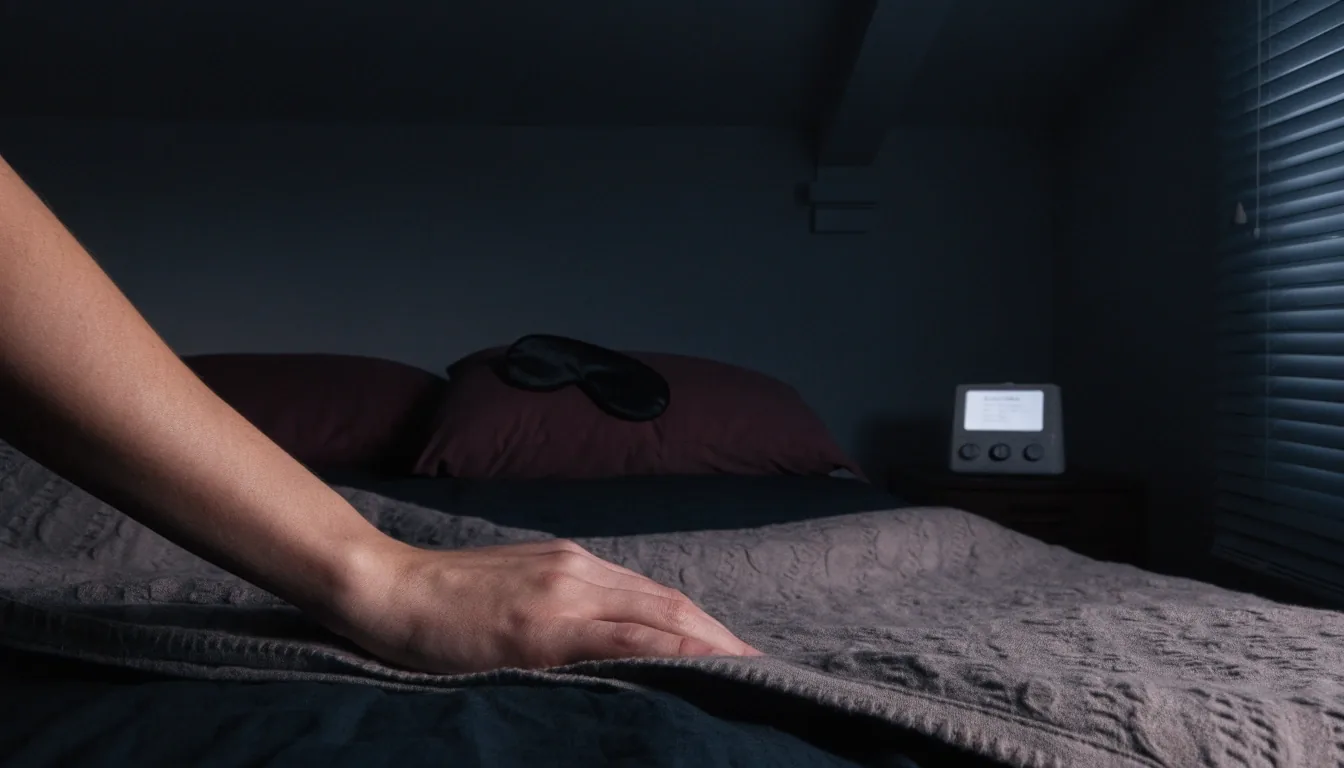
Go into your bedroom at the time you normally go to sleep. Stand where your bed is and look around. Street lights through curtains, standby LEDs on electronics, a charging phone, a hallway glow under the door: all of these register even when you think you have adjusted. If you can see your hand in front of your face, there is probably more light than you want.
Fix what you can with curtains, tape over small LEDs, and a charging spot outside the bedroom. What you cannot remove, you cover. Plenty of readers run the audit once and are surprised by how much of their bedroom is still lit at 22:30, long after the room feels dark.
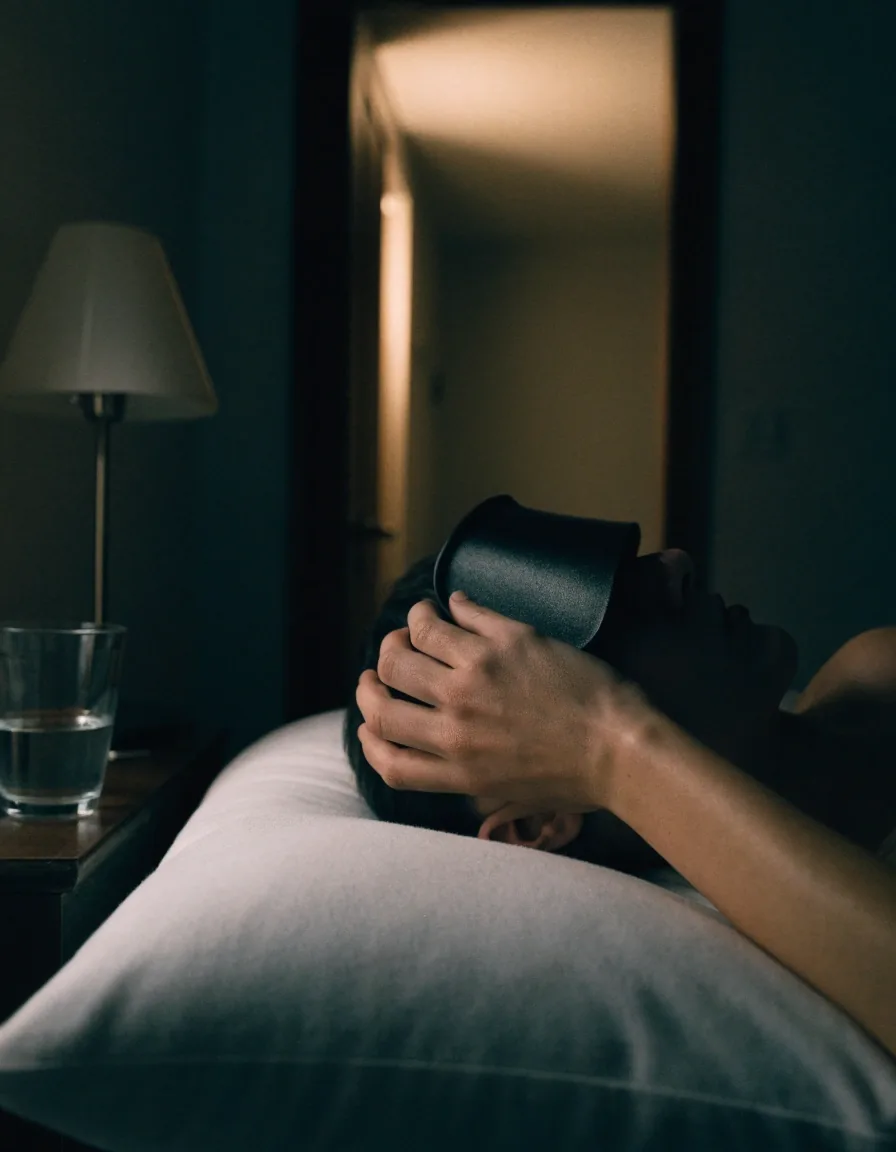
A contoured mask sits away from the eyes, so side sleepers are not pressing into the cushion all night.
Blocking the light that stays
For light you cannot eliminate, a blackout mask is the simplest tool. The Bon Charge Classic Blackout Sleep Mask is designed to block out light and uses a contoured shape so it does not press directly on the eyes, which matters if you sleep on your side. The Nodpod Weighted Sleep Mask takes a different approach: it adds gentle pressure around the eyes and suits people who dislike bulky head straps.
Either one is a genuine fix for a bright bedroom or a hotel room. Choose based on whether you want flat blackout coverage or a weighted, calming feel. If you travel for work, the lighter of the two tends to pack smaller; if you sleep on your side at home, the contoured shape usually wins.
Both masks solve the same problem from opposite directions: flat coverage, or weight that settles you.
Sound: mask the irregular, keep the steady
The problem with sound is rarely volume. It is unpredictability: a motorbike at 23:00, a neighbor's television, a rooster at 04:30. Steady sound covers the gaps between those events. A white-noise machine like the Yogasleep Dohm Classic is fan-based and lets you control speed and volume, which means you can tune it to your room rather than a fixed loop.
Set it below the level of the sounds you are trying to cover, and keep it running all night. If it has to be loud to work, a different fix (earplugs, a door seal, or moving the bed) may be better. A fan you already own produces steady sound too, so test that first before buying anything.
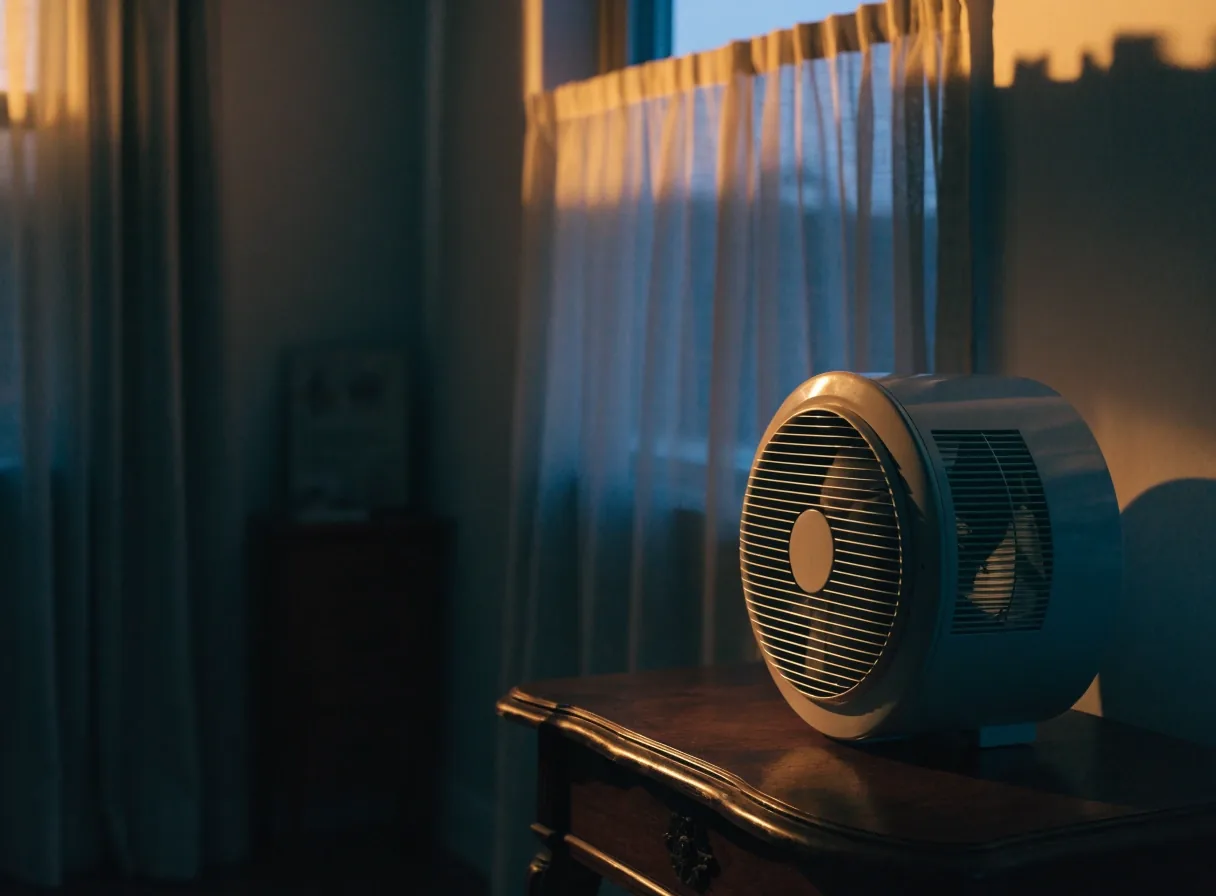
Tune the steady sound below the events you are trying to cover, not above them.
Temperature and airflow
Cooler rooms feel easier to fall asleep in, and Indonesia gives you two versions of the problem: a warm room without AC and an air-conditioned room that gets too cold by morning. In a warm room, a fan aimed at the wall rather than directly at you moves air without a constant draft. In an AC room, a timer or a slightly higher setting usually works better than a fixed low temperature.
Warm room, no AC
Aim the airflow at the wall and let it circulate back into the room. Direct air dries your skin and turns into a draft near the morning. If the room still runs warm, open the window briefly before bed to swap the hot air out.
Air-conditioned room
Set the AC a step warmer and add a timer to run it off, rather than leaving it low all night. Cool enough that you are comfortable under a light cover is the working target, not a specific number on the remote.
If your mattress retains heat, that is a separate issue and a cooling mattress or a breathable topper is worth considering before you buy more pillows. A topper is easier to return and cheaper to test than a whole new mattress, so it makes sense as a first move.
Dark, quiet, cool, and the same wake time seven days a week.
Nothing on this list requires a purchase. The cheapest changes usually do the most work, and they make every product you already own easier to judge.
Weighted blankets and the heat question
A weighted blanket uses pressure as its main selling point, and the Baloo Living Weighted Blanket is frequently compared with others for comfort and warmth. In an air-conditioned bedroom, the pressure can feel calming. In a warm room, the same blanket often ends up pushed to the floor by morning.
Before you buy, check the fill distribution and how the weight sits across your body rather than just the total weight. If you want pressure without the heat, a weighted sleep mask gives you a similar sensation in a much smaller area, and it works whether or not the room is cooled.

Check how the weight is distributed across the body, not just the total on the label.
A bedside routine that stays small
Keep the last thirty minutes before bed boring in the best way. Phone out of reach or on a charger across the room, one small lamp instead of an overhead light, and nothing that needs a decision. This Works Deep Sleep Pillow Spray works as a scent cue at the pillow, and a magnesium-infused shower gel does the same job in a warm shower earlier in the evening.
The point of these products is repetition, not effect. A cue only works if it happens most nights, so build a version you can keep on a bad week. A short version you repeat beats a long routine you abandon by Thursday.
Screen
Phone on a charger across the room. If a bedside device lets you do that, it is earning its place.
Light
One small lamp low and warm, overhead light off. Red-light lamps help only if the main lights are already low.
Cue
Pillow spray or a warm shower earlier. The same cue most nights, at roughly the same time.
Circadian rhythm and a consistent wake time
Your body clock reads light and timing, not intention. A bedtime that moves by two hours across the week is one of the most common patterns we see in readers who track their sleep. Pick a wake time you can hold seven days a week, then let your bedtime settle about seven to eight hours before it.
Morning light matters here: open the curtains or step outside within an hour of waking. In Indonesia, that is easy to do and one of the few free inputs with a noticeable effect on how the evening feels.
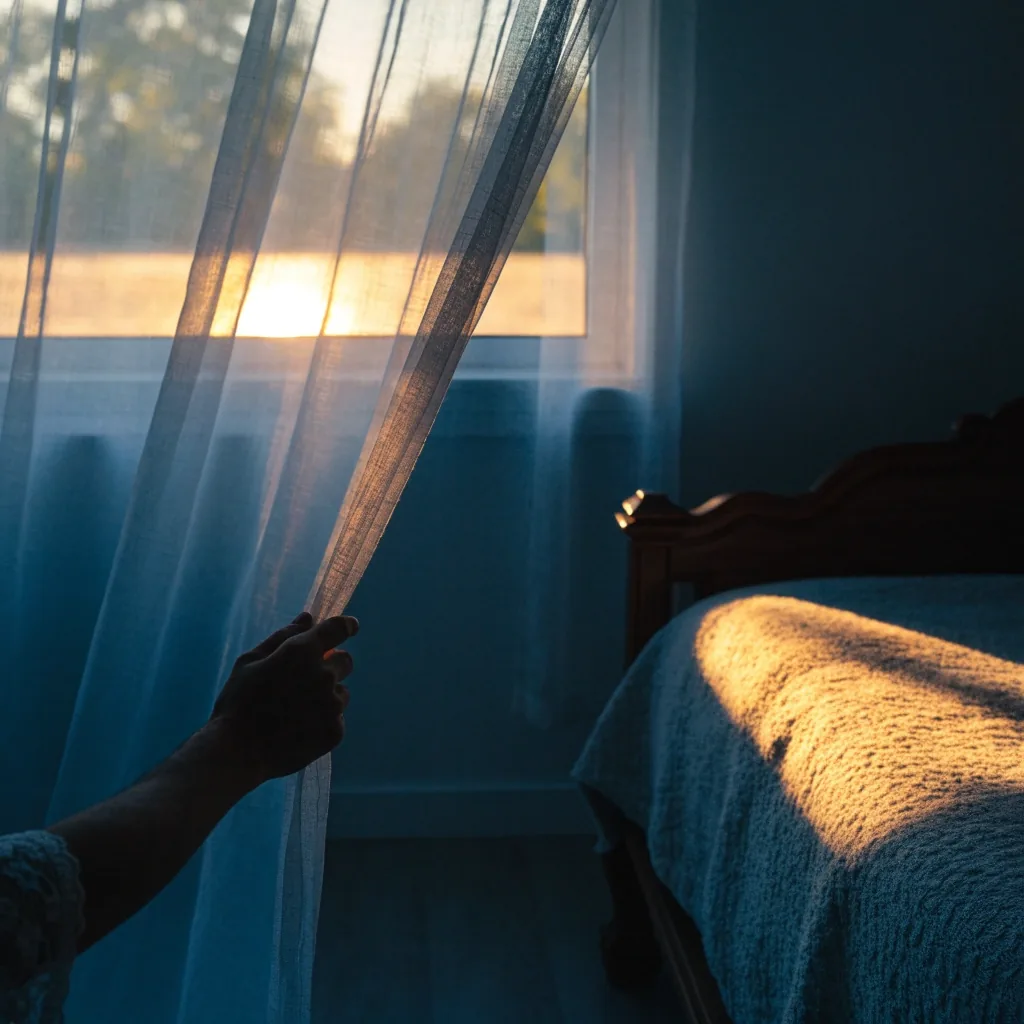
Morning light within an hour of waking is one of the few free inputs with a clear pay-off.
Bedside devices: useful or clutter?
A bedside device earns its place if it removes something else from the room. The Hatch Restore 3 sits on a bedside table and plays customizable sleep sounds, and it is positioned as a wind-down gadget rather than a phone replacement. That framing is the useful part: if a device lets you leave your phone outside the bedroom, it is doing real work. If it just adds another screen, it is not.
Red-light bedside lamps fall into the same category: they change how the room feels in the evening, but only if you already keep the main lights low. Both device types are conveniences, not fixes for a room that is still bright or loud.
Related review
Our Hatch Restore 3 review covers the bedside sound and light setup in more detail, including how the device behaves over a full week of use.
Read the Hatch Restore 3 reviewAdjustable bases and sleep position
An adjustable base changes your sleeping position, which matters for people who snore, have reflux, or wake with pressure in the lower back. Raising the head of the bed slightly can help more than a stack of pillows, because it keeps your spine in one line instead of bending your neck.
This is one of the few bedroom changes that costs real money, so test the position with pillows first. If a small incline helps, an adjustable base makes it repeatable every night, and a repeatable position is usually what makes the difference.
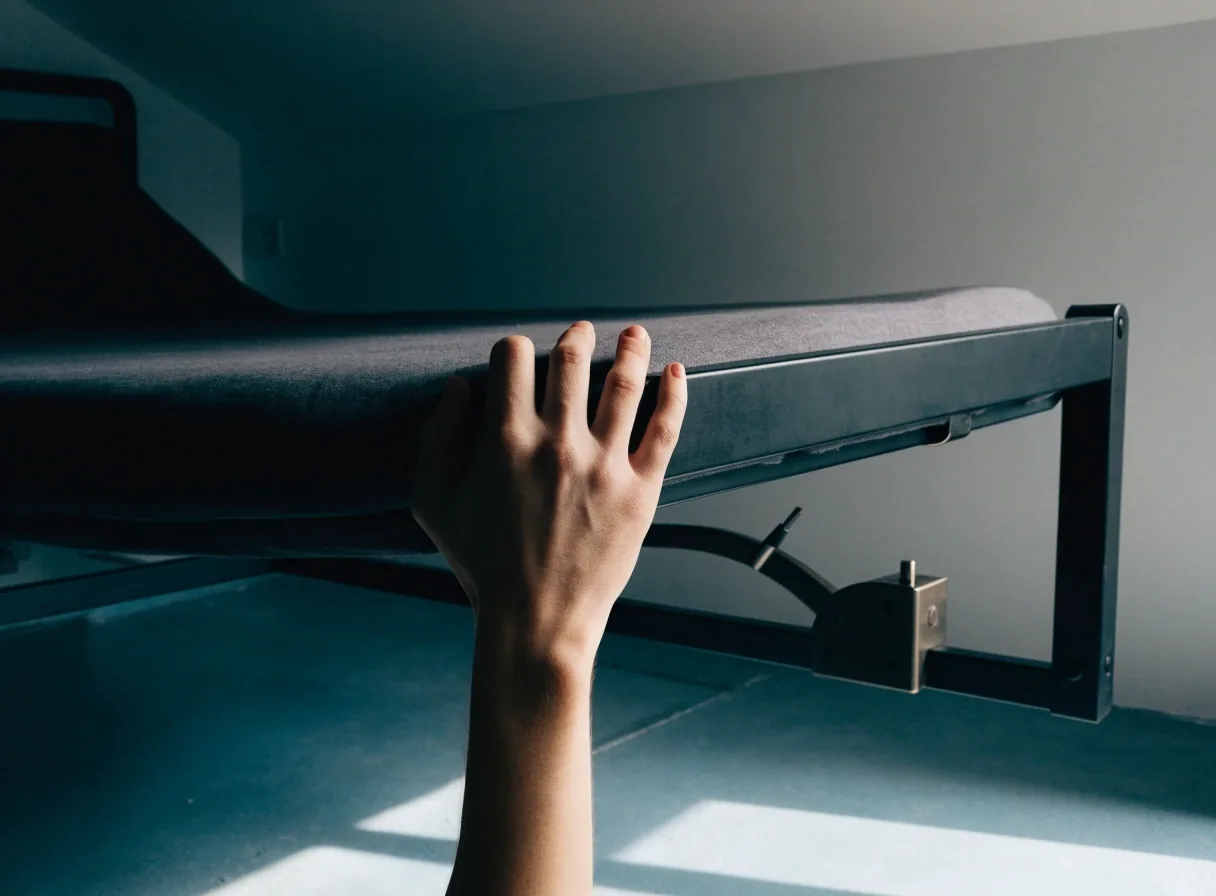
A small incline keeps the spine in one line, which is hard to do with a stack of pillows.
Tonight's checklist
Five steps, in this order
- Step 1 Stand in the room at bedtime and find every light source. Go in at the time you actually sleep, not at dusk. Look from the bed, not the doorway.
- Step 2 Cover what you cannot remove, with curtains or a blackout mask. Tape small LEDs, move the charger out, and keep a mask within reach of the bed.
- Step 3 Add steady sound if your room has unpredictable noise. Test a fan you already own before considering a white-noise machine.
- Step 4 Lower the temperature or improve airflow before you change bedding. Set a timer on the AC and aim the fan at the wall, not at the bed.
- Step 5 Set one wake time and hold it for a week. Wake time moves the whole system. Bedtime usually follows on its own after a few days.
Most readers get a clear result from steps one through four. If nothing changes after a week, the issue is more likely your routine or your sleep surface than your room, and those are the next two guides.
Questions readers ask about bedroom setup
Which sleep mask blocks light without feeling too tight? +
A contoured mask like the Bon Charge Classic Blackout Sleep Mask blocks light without pressing on the eyes, which suits side sleepers. The Nodpod Weighted Sleep Mask uses gentle pressure and no bulky strap, so it feels different rather than tighter.
Do I need a white-noise machine if I have a fan? +
A fan already produces steady sound. A machine like the Yogasleep Dohm Classic adds control over speed and volume, which helps if you want to tune it to the room. If your fan works, keep it.
How cool should an air-conditioned bedroom be? +
Cool enough that you are comfortable under a light cover, and not so cold that you wake up chilled. A higher setting with a timer often works better than running the AC at its lowest all night.
Where to go next
Once the room is right, look at your routine and your sleep surface
If the room changes have not moved anything after a week, the pattern is usually in the evening routine or in what you are sleeping on. Both of those guides pick up where this one stops, and you can read them in either order.
Ask us directly
Questions about your own bedroom, or about a product comparison before you buy? Reach the Restorative team at our Semarang office during working hours.
- Jl. Gajah Mada No. 15, Sekayu, Semarang Tengah, Semarang, Jawa Tengah, 50134
- +62 24 359 0688
- [email protected]
- Monday to Friday, 9:00 AM – 6:00 PM